Get well flowers are one of the few gifts where the wrong choice is worse than nothing. A hospital room is small, shared, dry and full of somebody who feels unwell. A bouquet built for a dining table does not belong there, and a strongly scented one is genuinely unwelcome.
Here is what works, what does not, and what the ward will accept.
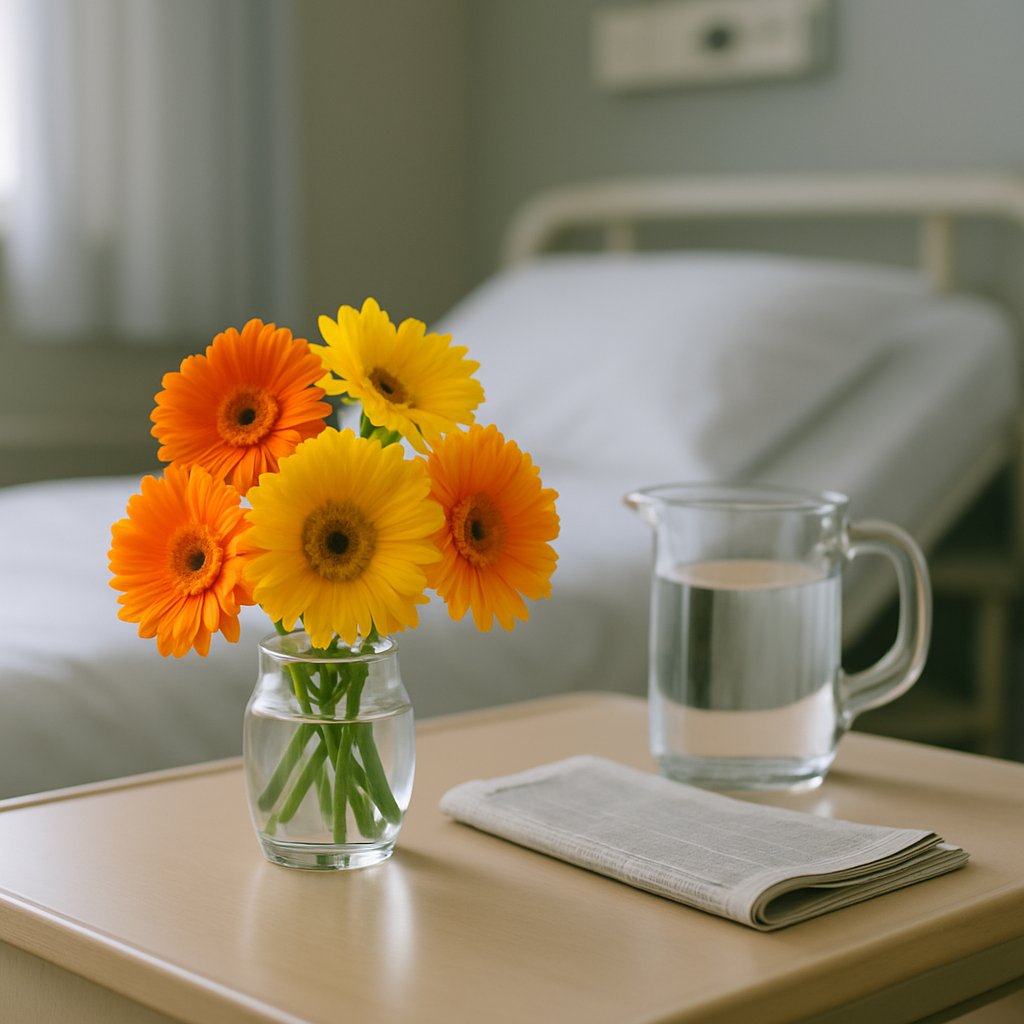
The three rules
Small. A hospital bedside table holds a water jug, a phone, glasses and whatever they are reading. What is left is roughly the footprint of a coffee mug. Anything tall gets moved to the floor or the nurses’ station.
Unscented. This is the one people get wrong most often. Lilies are the classic mistake: beautiful, and far too much in a room with no ventilation. Gerbera daisies, carnations, chrysanthemums and roses are all safe on this count.
Sturdy. Hospital air is dry and nobody is going to change the vase water on a schedule. Carnations and chrysanthemums are the most forgiving cut flowers in common use and can hold ten days or more. Delicate seasonal blooms will not last the stay.
Where flowers are not allowed at all
- Intensive care units, without exception
- Many oncology wards, because of infection risk
- Transplant units, for the same reason
- Some wards with shared rooms restrict scented flowers specifically
Policies vary by hospital. Thirty seconds on the phone to the ward desk removes the guesswork, and it is a better use of time than choosing between two bouquets.
If the ward does not allow flowers, send them to the patient’s home instead. Coming back to an empty house after a hospital stay is bleak, and a bouquet on the table changes that more than one on a ward windowsill would have.
What the florist needs from you
- The patient’s full name exactly as the hospital has it registered. Ward desks match against their own list, and a nickname will not be found
- The ward, and the room number if you have it
- A phone number for you, in case the patient has been discharged before we arrive
That last point matters more than it sounds. If somebody is discharged early, a good florist calls you and redirects the delivery to their home at no extra cost rather than leaving it at a desk for nobody.
When to send
Early in the stay rather than late. Flowers on day one or two mark the fact that somebody noticed, which is when it counts. Flowers on day six arrive when the patient is thinking about going home and now has a vase to carry to the car.
For planned surgery, send the day after rather than the day before. Before the operation the flowers sit unseen; after it, they are the first thing in the room that is not medical.
What to write
Keep it short and keep it light. Hospital cards get read by visitors, so this is not the place for anything private.
Avoid “get well soon” if the illness is serious, because it can read as impatient. “Thinking of you” carries the same warmth without implying a schedule. If you are close enough to be useful, offer something specific: an actual day you can visit, or a job you will take off their hands.
When flowers are the wrong gift
For a long stay, flowers stop being useful somewhere around week two. By then the patient has run out of surfaces and what they want is a phone charger, a decent book or real food.
For anyone with allergies or on a respiratory ward, skip flowers entirely. And for someone being discharged in a day or two, send to the house for when they get back instead.
Sending get well flowers in Atlanta
We deliver to hospitals across Atlanta and the surrounding suburbs for a flat $12, with same-day delivery for orders placed before 1 PM Eastern Time.
Our get well bouquets are deliberately built for this: compact, bright and low-scent. We keep lilies out of that category entirely for the reasons above. Gerbera daisies are the most common choice and hold up well in dry hospital air.
Tell us it is a hospital delivery when you order and we will size the arrangement for a bedside table rather than a hallway. If you are not certain what the ward allows, call us and we will talk it through before you pay.